
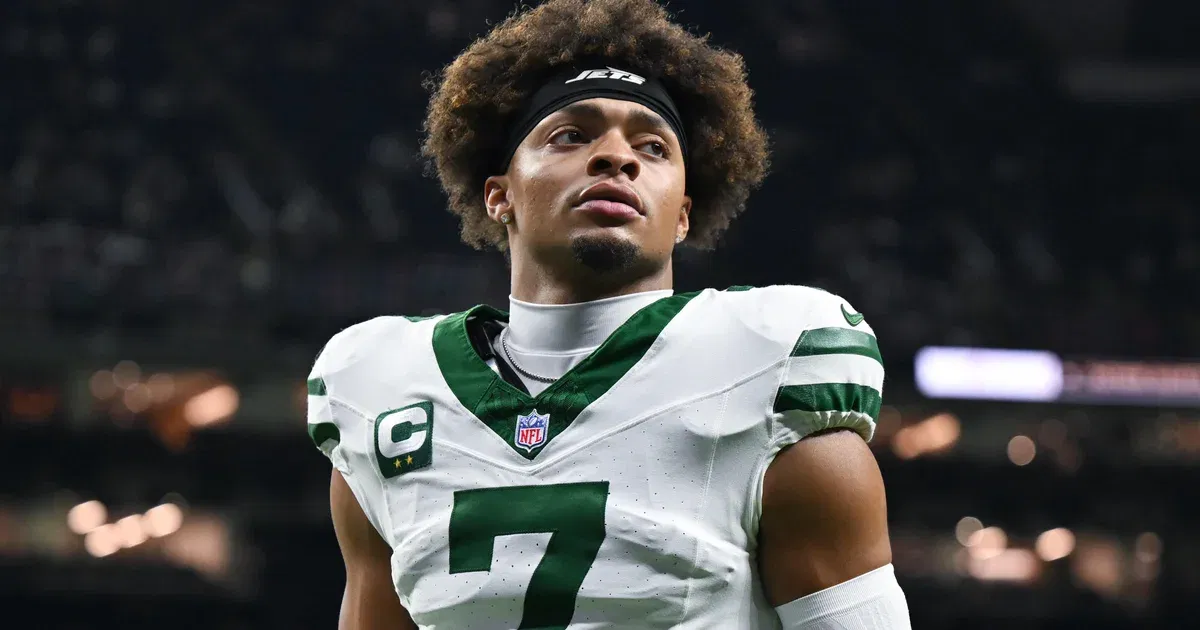
The New York Jets have agreed to trade quarterback Justin Fields to the Kansas City Chiefs, pending a physical, in a move that sends the former first-round pick to his fourth team in four seasons. The Jets will receive a 2027 sixth-round draft pick and pay $7 million of Fields' $10 million guaranteed 2026 salary, according to sources familiar with the deal. Fields, 27, is expected to serve as the primary backup to two-time MVP Patrick Mahomes, who continues to rehab from knee ligament surgery suffered late in the 2025 season.
How the Fields Trade Unfolded: Inside the Quarterback Shuffle
The trade, first reported by ESPN's Adam Schefter on Monday, represents a significant shift in both teams' quarterback rooms. For the Chiefs, it provides insurance behind Mahomes, whose return timeline remains uncertain despite doctors clearing him for Week 1 potential. "I want to be ready for Week 1," Mahomes said in January. "The doctors said I could, but I can't predict what happens throughout the process."
Fields signed a two-year, $40 million contract with the Jets last March, with $30 million guaranteed, after being released by the Pittsburgh Steelers. He started nine games for New York in 2025, compiling a 2-7 record with 1,259 passing yards, seven touchdowns, and just one interception. Despite the relatively efficient passing numbers, Fields was benched in Week 12 in favor of Tyrod Taylor and didn't play another game for the Jets, finishing the season on injured reserve with a knee injury.
"The defense is pretty good. If we can just complete a pass, it would look good," Jets owner Woody Johnson said during the team's 0-7 start last October. "We've got to complete some passes. You've got to convince them that you can do something. Otherwise it's hard to have a game that you can win."
Timeline: How Justin Fields' Journey Led to Kansas City
Justin Fields' NFL career has been marked by constant change since being selected 11th overall by the Chicago Bears in the 2021 draft. After three seasons in Chicago where he showed flashes of brilliance but struggled with consistency, the Bears moved on following the 2023 season, trading him to the Pittsburgh Steelers in 2024.
With Russell Wilson dealing with a calf injury to start the 2024 season, Fields opened as Pittsburgh's starter and led the team to a 4-2 start, throwing five touchdown passes and adding five rushing touchdowns with just one interception. However, when Wilson returned to health, Pittsburgh turned back to the veteran, sending Fields to the bench and eventually leading to his release.
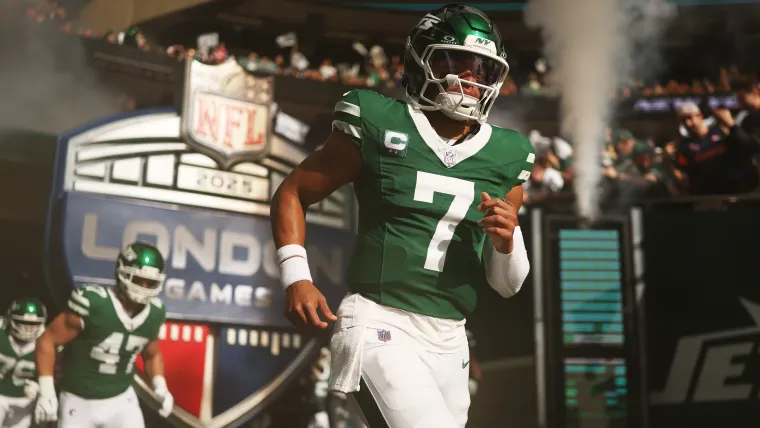
The Jets signed Fields in March 2025 to replace the released Aaron Rodgers, but his tenure in New York proved disastrous. Fields threw for fewer than 55 yards in four games, including a season-low 27 yards in a Week 2 loss to Buffalo. His 89.5 passer rating and 6.2 yards per attempt ranked near the bottom of qualifying quarterbacks, and his mobility—once considered his greatest asset—was limited by injuries and inconsistent offensive line play.
Now, Fields joins the Chiefs as the latest stop in what has become a quarterback journey unlike any other in recent NFL history: four teams in four seasons, each hoping to unlock the potential that made him a top draft pick and college star at Ohio State.
Why This Trade Matters: Expert Analysis and Impact
For the Chiefs, the trade represents a calculated risk with potentially significant upside. "The Chiefs get a talented quarterback who still possesses the physical tools that made him a first-round pick," said Vinnie Iyer of Sporting News, who graded the trade an 'A' for Kansas City. "Fields is much more mobile than Mahomes, especially now after the ACL tear. Being in [Andy] Reid's scheme, with the help of [offensive coordinator] Matt Nagy, I think he can develop into a capable spot starter if needed."
The move also provides Kansas City with insurance beyond 2026. Fields' contract runs through the 2026 season, giving the Chiefs a full year to evaluate him as a potential long-term backup or even trade chip. At just 27 years old, Fields remains younger than many established backups and offers a skill set that differs significantly from Mahomes, potentially giving defensive coordinators additional preparation challenges.
For the Jets, the trade represents a clean break from what was widely viewed as a failed experiment. "The Jets hit the jackpot in this trade," wrote SI.com's Jets analyst. "Instead of releasing Fields and eating his entire salary, they traded him to the Chiefs and ate $7 million of his $10 million guaranteed, pawning the rest of the deal off to Kansas City. They get a draft pick and clear $3 million in cap space."
The Jets' acquisition of Geno Smith last week signaled the end of Fields' tenure in New York, and general manager Darren Mougey found a willing trade partner in Chiefs GM Brett Veach. "This was a classic 'change of scenery' trade for both sides," said NFL Network analyst Ian Rapoport. "Fields gets a fresh start in a proven offensive system, and the Jets get something rather than nothing for a quarterback who wasn't in their plans."
Where Things Stand Now: Latest on the Fields-Chiefs Situation
As of Tuesday morning, the trade remains pending a physical, which Fields is expected to pass barring any unexpected complications from his knee injury. The Chiefs' quarterback room now features Mahomes as the unquestioned starter when healthy, Fields as the primary backup, and veteran Chris Oladokun likely competing for the third spot.
The financial implications are significant for both teams. The Jets will carry $7 million in dead money for 2026 but save $3 million in cap space they would have owed if they had simply released Fields. The Chiefs take on just $3 million of Fields' salary while gaining a quarterback with 53 career starts and experience in multiple offensive systems.
Fields' career statistics tell the story of a quarterback who has struggled to find consistency: a 16-37 record as a starter, 9,039 passing yards, 52 touchdowns against 32 interceptions, plus 2,892 rushing yards and 23 rushing touchdowns. His 80.2 career passer rating places him in the lower tier of starting quarterbacks, but his athleticism and arm strength continue to intrigue coaches and scouts.
What Happens Next: The Road Ahead for Justin Fields
In Kansas City, Fields will have the opportunity to learn from one of the NFL's most quarterback-friendly systems and work with head coach Andy Reid, who has a history of developing mobile quarterbacks. The Chiefs' offensive scheme, which emphasizes quick decisions and creative play designs, could theoretically play to Fields' strengths while minimizing his weaknesses in reading complex defenses.
Fields will also have the chance to work with Mahomes, who has mentored backup quarterbacks throughout his career. "Patrick has always been great with the quarterbacks in our room," Reid said earlier this offseason. "He understands that having a capable backup is essential in this league, especially with the physical nature of the position."
For Fields, this represents what many analysts believe is his last, best chance to establish himself as a viable NFL quarterback. If he succeeds in Kansas City, he could position himself for another starting opportunity elsewhere in 2027 or earn a long-term role as Mahomes' primary backup. If he fails, he may find himself on the journeyman quarterback carousel indefinitely.
The Bottom Line: Key Points to Remember
The Justin Fields trade to the Kansas City Chiefs represents a fascinating chapter in the ongoing NFL quarterback musical chairs. Key takeaways include:
- The Jets receive a 2027 sixth-round pick and save $3 million in cap space while paying $7 million of Fields' salary
- Fields becomes the primary backup to Patrick Mahomes, providing insurance as Mahomes recovers from knee surgery
- This marks Fields' fourth team in four NFL seasons following stints with Chicago, Pittsburgh, and New York
- Analysts grade the trade favorably for both teams, with the Chiefs securing a talented backup and the Jets clearing their QB room
- Fields' career statistics (16-37 record, 52 TD, 32 INT) reflect inconsistency but his physical tools remain intriguing
As the NFL offseason continues, the Fields trade stands as one of the more intriguing moves of the 2026 free agency period, blending financial maneuvering with quarterback development in a deal that could impact both franchises for years to come.