
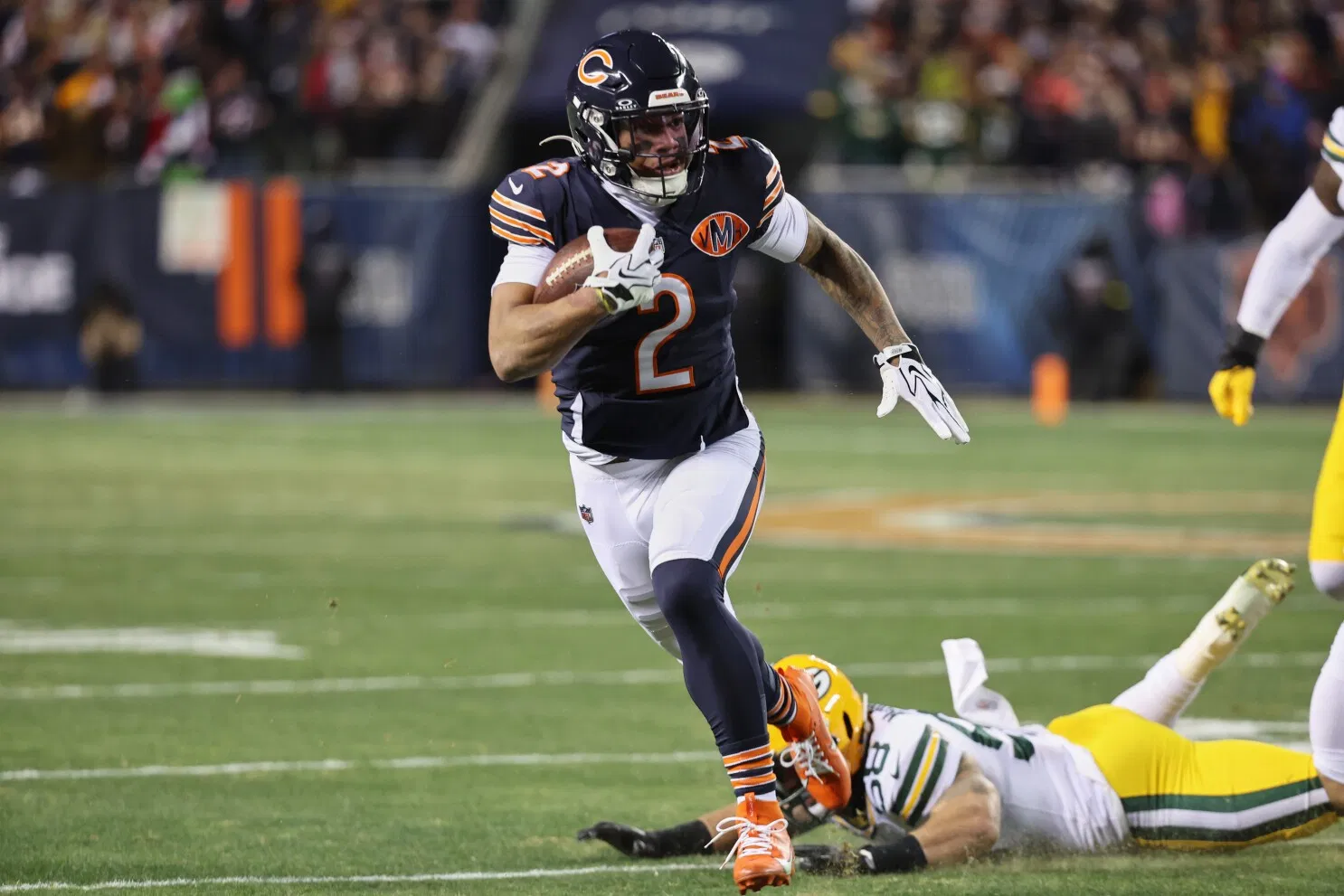
The NFL offseason has its first blockbuster trade, with the Chicago Bears agreeing to send veteran wide receiver DJ Moore to the Buffalo Bills in a move that reshapes both franchises' offensive plans for the 2026 season. According to multiple reports, the Bears will receive a 2026 second-round draft pick in exchange for Moore and a 2026 fifth-round pick, giving quarterback Josh Allen a proven weapon while allowing Chicago to clear significant salary cap space.
How the Blockbuster Trade Unfolded: Inside the DJ Moore Deal
The trade parameters emerged Thursday afternoon when ESPN's Adam Schefter reported the agreement between the two franchises. The deal cannot be officially finalized until the new league year begins on March 13, but both teams have agreed to the terms that will send the 28-year-old receiver to upstate New York.
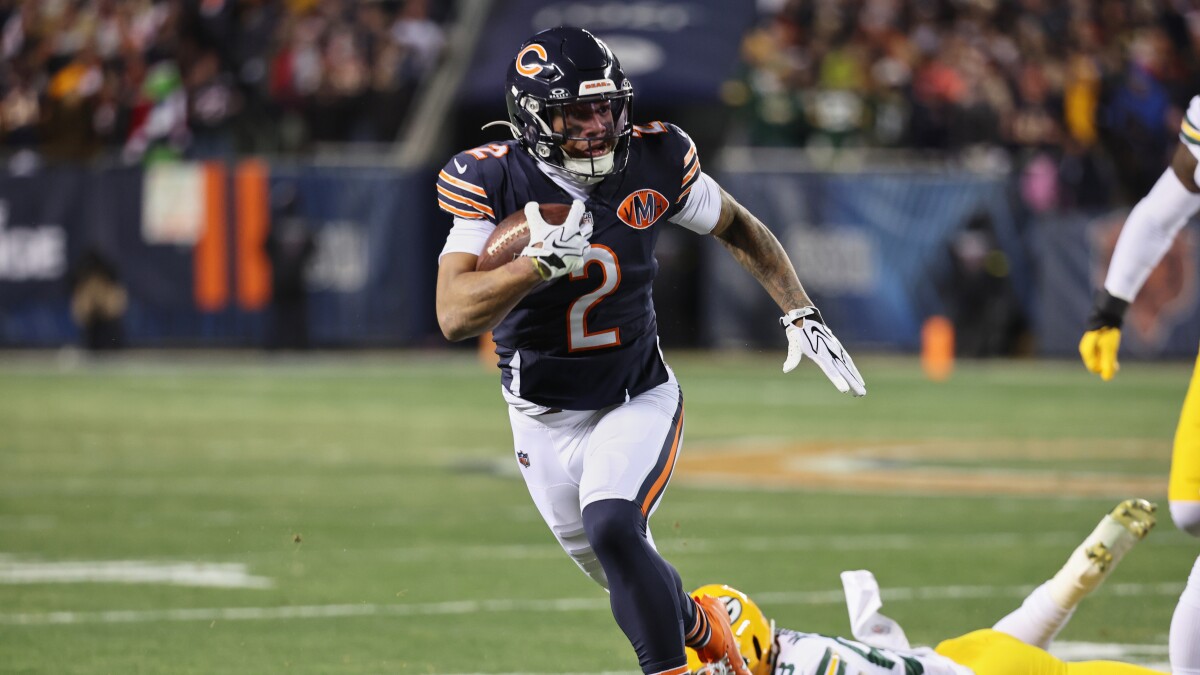
Moore's contract situation played a significant role in the trade dynamics. The receiver signed a four-year, $110 million extension with the Bears in July 2024 that was set to kick in this season. According to contract details obtained by ESPN, Moore's $23.5 million base salary for 2026 is fully guaranteed, while his identical 2027 salary becomes fully guaranteed next week. As part of the trade agreement, the Bills will guarantee $15.5 million of Moore's $23.5 million base salary in 2028.
For the Bears, moving on from Moore represents a strategic shift after his production declined in 2025. The veteran receiver posted career-low numbers with just 50 receptions for 682 yards, though he still managed six touchdowns. With younger weapons like Rome Odunze and Luther Burden emerging, Chicago decided to clear Moore's substantial cap hit and acquire additional draft capital.
Timeline: How the DJ Moore Trade Developed Over 24 Hours
The trade unfolded rapidly on March 5, 2026, beginning with initial reports from NFL insiders and culminating in confirmed details by evening. Here's how the story developed:
- 1:50 PM ET: Adam Schefter of ESPN first reports the Bears and Bills are finalizing a trade that would send DJ Moore to Buffalo.
- 2:15 PM ET: Schefter provides initial contract details, noting Moore's 2026 salary is fully guaranteed and his 2027 salary guarantee vests next week.
- 3:30 PM ET: NBC Sports' Pro Football Talk confirms the draft compensation: a 2026 second-round pick to Chicago for Moore and a 2026 fifth-round pick.
- 4:45 PM ET: Financial analysts at OverTheCap detail the cap implications, revealing the Bears would save $16.5 million while the Bills would take on $24.5 million in 2026.
- 6:20 PM ET: Multiple outlets report the trade cannot be officially processed until the new league year begins on March 13, though both teams have agreed to terms.
- 8:00 PM ET: Analysis pieces begin circulating with initial grades for both teams, generally favoring the Bears but acknowledging Buffalo's need for receiver help.
Why This Trade Matters: Expert Analysis and Impact on Both Teams
The Moore trade represents a classic "win-win" scenario for both franchises, according to multiple analysts, though with different objectives. For the Bills, acquiring Moore addresses their most pressing offensive need: a reliable outside receiver who can complement Stefon Diggs and create opportunities for quarterback Josh Allen.
"Buffalo was in the market for a wide receiver and they've found one who has proven he can be a WR1 in this league," said NFL Network's Tom Pelissero. "Moore gives Josh Allen another weapon who can stretch the field and make contested catches."
Financial analysts note the Bills are taking on significant salary cap responsibility. Moore's $24.5 million cap hit in 2026 puts pressure on Buffalo's cap situation, though the team can restructure the contract to create immediate space. According to cap experts, the Bills could reduce Moore's 2026 cap hit to under $7 million through restructuring, creating approximately $17.7 million in space.
For the Bears, the trade continues their strategic rebuild under general manager Ryan Poles. By moving Moore, Chicago clears $16.5 million in cap space that can be redirected toward other needs, particularly along the offensive line and defense. The additional second-round pick also gives the Bears more flexibility in the draft, where they hold multiple early selections.
"The math for the Bears is relatively straightforward," wrote USA Today's trade analysis. "By trading Moore, Chicago cleared his full $16.5 million in cap space while adding valuable draft capital. With young receivers already on the roster, this was a logical move for a team building toward sustained contention."
Where Things Stand Now: Latest on the DJ Moore Trade
As of March 6, 2026, the trade agreement is in place but cannot be officially processed until the new league year begins on March 13. Both teams are proceeding with the understanding that the deal will be finalized at that time, barring any unexpected complications such as failed physicals.
The Bills have already begun planning for Moore's integration into their offense. Offensive coordinator Joe Brady, who previously worked with Moore during their time together with the Carolina Panthers, is familiar with the receiver's skill set and how to maximize his talents. This existing relationship likely played a role in Buffalo's pursuit of Moore.
In Chicago, the Bears are moving forward with their younger receiving corps. The team drafted Rome Odunze with the ninth overall pick in 2023 and added Luther Burden in the 2025 draft, giving them two promising young targets to build around. Combined with tight end Colston Loveland, the Bears believe they have sufficient receiving talent despite Moore's departure.
Salary cap implications are now being calculated by both front offices. The Bears' $16.5 million in created space could be used to address multiple positions in free agency, while the Bills may need to make corresponding moves to accommodate Moore's contract while remaining compliant with the salary cap.
What Happens Next: The Road Ahead for DJ Moore and the Bills
Once the trade is finalized on March 13, attention will turn to how Moore fits into Buffalo's offensive scheme and what his production might look like alongside Josh Allen. Historical data suggests Moore could see a significant rebound in production with a quarterback of Allen's caliber targeting him regularly.
Fantasy football analysts are already projecting Moore as a potential WR2 with upside in Buffalo's offense. "Moore goes from a questionable quarterback situation in Chicago to one of the best quarterbacks in the league," noted a FantasyPros analysis. "His target share might decrease slightly playing alongside Stefon Diggs, but the quality of those targets will improve dramatically."
For the Bears, the additional second-round pick gives them more flexibility in the upcoming draft. Chicago now holds multiple picks in the first two rounds and could package them to move up for a specific target or spread the selections across multiple positions of need.
Long-term, this trade will be evaluated based on how the draft picks develop and whether Moore can recapture his earlier form in Buffalo. If the receiver returns to his 1,000-yard ways and helps the Bills make a deep playoff run, the substantial financial commitment will be justified. For Chicago, if the cap space and draft capital lead to improved roster construction, they'll have made the right decision to move on from a declining asset.
The Bottom Line: Key Points to Remember
- The Chicago Bears are trading WR DJ Moore to the Buffalo Bills for a 2026 second-round pick, while sending a 2026 fifth-round pick to Buffalo.
- Moore's contract includes a four-year, $110 million extension with significant guaranteed money, including fully guaranteed salaries in 2026 and 2027.
- The trade frees up $16.5 million in cap space for the Bears while giving the Bills a veteran receiver to pair with Josh Allen.
- Moore is coming off a career-low season with 50 receptions for 682 yards but has shown WR1 capability throughout his career.
- The trade cannot be officially finalized until the new league year begins on March 13, 2026.
- Both teams receive positive grades from analysts, with the Bears clearing cap space and acquiring draft capital, while the Bills address their biggest offensive need.