

The Denver Nuggets have agreed to send Peyton Watson to the Cleveland Cavaliers in a multi-team sign-and-trade, ending the 23-year-old wing's four-year run in Denver while handing him the four-year, $88 million contract the Nuggets were unwilling to match. In return, Denver receives a 2031 first-round pick and a 2032 second-rounder — and no players back — in a move that signals the franchise is prioritizing payroll relief over maximizing Nikola Jokic's championship window.
The deal, first reported by ESPN's Shams Charania and confirmed by The Denver Post on Wednesday, came together after weeks of stalled negotiations between Watson's camp and the Nuggets, who balked at a salary "well north of $20 million per year." Watson, a restricted free agent represented by Klutch Sports and superagent Rich Paul, never received an offer sheet during free agency, leaving a sign-and-trade as the release valve for both sides.
Inside the Deal: How the Multi-Team Trade Breaks Down
The trade that sends Watson to Cleveland is far bigger than a two-team swap. According to Charania's report and league sources, Cleveland sends Max Strus to the LA Clippers and Tre Mann to the Washington Wizards, while Washington sends Cam Whitmore to Cleveland and Julian Reese to Denver. The Clippers add a 2027 second-rounder (originally from Philadelphia) to Cleveland for Strus, and a related Dennis Schroder-to-Charlotte move on Friday turns the overall swap into a five-team deal.
Reese, who was on a two-way contract, will be waived by Denver. The Nuggets effectively exit the deal with no incoming players and two open roster spots, leaving their payroll about $2 million over the second apron. They will create a trade exception for 50% of Watson's salary but cannot use it while above the second apron. The crux for Denver is the draft compensation — a trade-eligible first-round pick for a franchise that previously had none to deal.

From 30th Pick to $88 Million: Watson's Four-Year Arc
Watson was selected 30th overall out of UCLA in the 2022 NBA Draft and spent most of his rookie season developing in the G League while Denver won the 2023 championship. He grew into a rotation regular the following year, then delivered a genuine breakout in 2025-26: 40 starts in 54 games, career highs of 14.6 points, 4.9 rebounds, 2.1 assists and 0.9 steals on 49.1% shooting, including 41.1% from three-point range and four 30-point games after none in his first three seasons.
His most impressive stretch came when Jokic missed 16 games and Denver desperately needed shot creation off the dribble — Watson averaged an efficient 22.5 points over 17 games. But a hamstring strain suffered Feb. 4 in New York derailed the rest of his season. He missed all but a five-game, physically limited return stint and did not play in Denver's six-game first-round playoff loss to Minnesota.
Defensively, Watson has been elite since entering the league, ranking second in field-goal percentage allowed as the contesting defender among players who have contested at least 2,000 shots. In all, he played 225 games for the franchise that drafted him, starting 64 and appearing in 29 playoff contests. "If he has a great year, he can put himself where he wants to," Nuggets coach David Adelman said before opening day. "He can set his market, and I think he will."
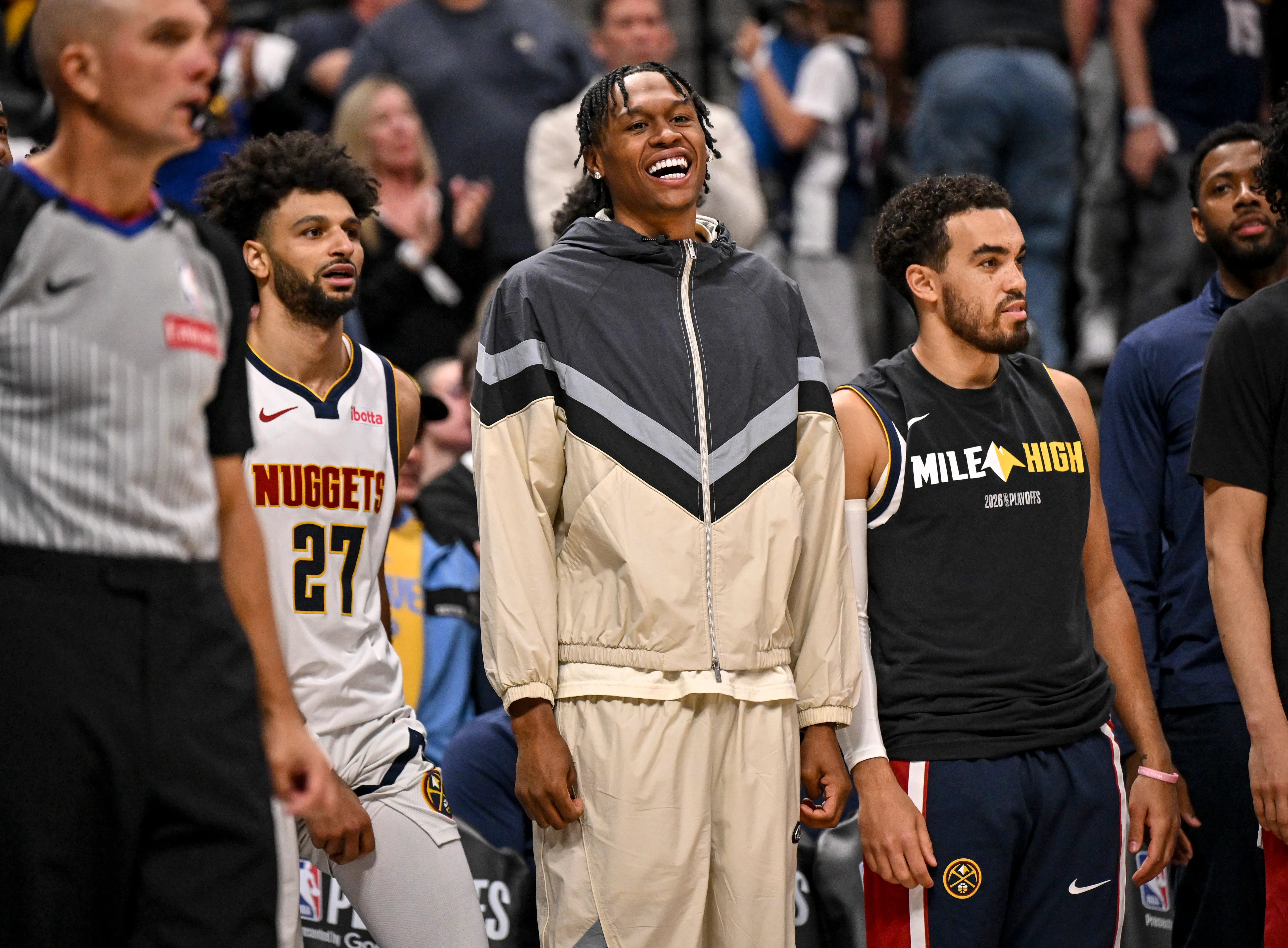
Why the Nuggets Said No: Second Apron Math and a Question of Direction
Denver's decision was rooted in the NBA's new collective bargaining agreement and its punishing second-apron penalties. The Nuggets entered the offseason as the only team in the second apron, and signing Watson at the $22 million average annual value Cleveland offered would have spiked the 2026-27 payroll more than $20 million deeper into the tax. Retaining Watson without a subsequent cost-cutting move would have produced a record luxury tax bill.
Watson's representatives navigated interest from the Milwaukee Bucks, Portland Trail Blazers and Clippers before landing on the guaranteed $88 million deal in Cleveland. Critics, however, see a Denver franchise caught between two identities. Columnist Troy Renck called the trade "a failure" with "no argument to construct otherwise," pointing out the Nuggets matched Oklahoma City's $11.75 million offer sheet for Spencer Jones earlier in the summer — a move that alone added $32 million to their tax bill — only to let a homegrown, athletic, two-way wing walk for picks that will not convey until the 2030s.
"So let me get this straight. We got no players. And the draft picks are available when I am 36 and 37 years old?" Renck wrote, imagining Jokic's reaction. The Nuggets, he added, "more closely resemble the unraveling of the Bucks in the last years of Giannis Antetokounmpo than the championship team of 2023."
Where the Trade Stands Now
The sign-and-trade was not officially completed Wednesday night, as league sources said the deal was expanding to include additional transactions around the NBA. Once finalized, Denver will carry two open roster spots and is reportedly turning its attention to free-agent scorer DeMar DeRozan, who is 37.
For Watson, the move to Cleveland lands him with a contender that cleared a wing spot by shipping out Strus, and it locks in life-changing money after Denver chose to prioritize Christian Braun's five-year, $125 million extension a year ago, leaving Watson to navigate a contract season on an uncertain future.
What's Next: The Jokic Clock Is Ticking
Watson's departure raises the stakes on Denver's immediate future. Jokic did not agree to an extension this summer and becomes eligible for a record $359.5 million supermax next year. The Nuggets now hold a trade-eligible first-round pick they can use to acquire help — or attach to dump Zeke Nnaji's salary — but as Renck concluded, "barring Watson bailing on his teammates, the Nuggets are not better without him."
Watson, for his part, saw this coming as far back as October. "From what I understand, it was just a financial business decision," he told The Denver Post. "As a business, you've gotta operate (based on) what's best for your business. And when it comes time for me to make my decision next summer, I've gotta operate as a business myself. That's no diss to the Nuggets."
The Bottom Line: Key Takeaways
- Denver traded Peyton Watson to Cleveland in a multi-team sign-and-trade, netting a 2031 first-round pick and a 2032 second-rounder.
- Watson signed a four-year, $88 million contract with the Cavaliers after the Nuggets balked at paying more than $20 million per year.
- Cleveland sent Max Strus to the Clippers and Tre Mann to the Wizards, while Cam Whitmore lands with the Cavs and Julian Reese with Denver (then waived).
- The Nuggets, the only team in the second apron, prioritized tax relief over retaining a 23-year-old breakout two-way wing.
- Watson averaged 14.6 points and 41.1% from three in 2025-26 before a Feb. 4 hamstring strain ended his season.