

Joshua Báez's first game in the major leagues read like something out of a movie — a story so improbable that baseball's historians had to rewrite their record books by the end of the afternoon. On Saturday, August 15, 2026, the St. Louis Cardinals rookie outfielder became the first player in Major League Baseball history to hit a home run in each of his first three plate appearances, powering an 8-4 victory over the Chicago Cubs at Wrigley Field.
The 23-year-old didn't just homer three times — he did it with a signature flourish. Báez hammered the very first pitch he saw as a big leaguer, a 93-mph fastball from Cubs starter Matthew Boyd, a staggering 450 feet to dead center field for a two-run shot that staked the Cardinals to a 3-0 lead and sent the visiting dugout into a frenzy.
How Joshua Báez Made History: Three Homers in Three At-Bats
Báez's second at-bat came in the fourth inning, again against Boyd. He worked the count full before crushing a 78-mph changeup 382 feet into the left-field seats, giving St. Louis a 4-3 lead. The record-breaker arrived in his third plate appearance, when he turned on an 83-mph slider on the outer half and launched it 368 feet into the right-field bleachers for another two-run homer and a 6-3 advantage.

In a feat of rare symmetry, the right-handed hitter homered to all three fields on three different pitches — a fastball to center, a changeup to left, and a slider to right. He proved human only in his fourth at-bat, lining out to Cubs left fielder Ian Happ. Báez finished 3-for-4 with three home runs and five RBIs.
"Báez made Major League Baseball history by hitting a home run in each of his first three plate appearances," Fox News reported, describing the debut as "something out of a movie." ESPN noted that the rookie "set an MLB record with three home runs in the first three plate appearances of his major league career."
From Dorchester to Wrigley Field: Báez's Unlikely Rise
Báez's path to baseball's record books was anything but linear. Born in Boston on June 28, 2003, he moved to Santo Domingo in the Dominican Republic as an infant before returning to the Dorchester neighborhood of Boston in sixth grade — without knowing a word of English, communicating through Google Translate.
A two-way star who touched 97 mph as a high school pitcher, Báez was named Massachusetts Gatorade Baseball Player of the Year in 2020 even though the COVID-19 pandemic wiped out his season, an honor earned on work ethic and potential. The Cardinals drafted him in the second round, 54th overall, in the 2021 MLB Draft and signed him to a $2.25 million bonus to lure him away from a Vanderbilt commitment.
The early years were a grind. Báez hit .158 in his 2021 rookie-ball debut and battled a wrist sprain in 2022. But he kept climbing — .218 with seven homers and 30 stolen bases in 2023, then .245 with 11 homers in 2024 — before a breakout 2025 season in which he hit .287 with 20 home runs, 79 RBIs and 54 stolen bases across High-A and Double-A.
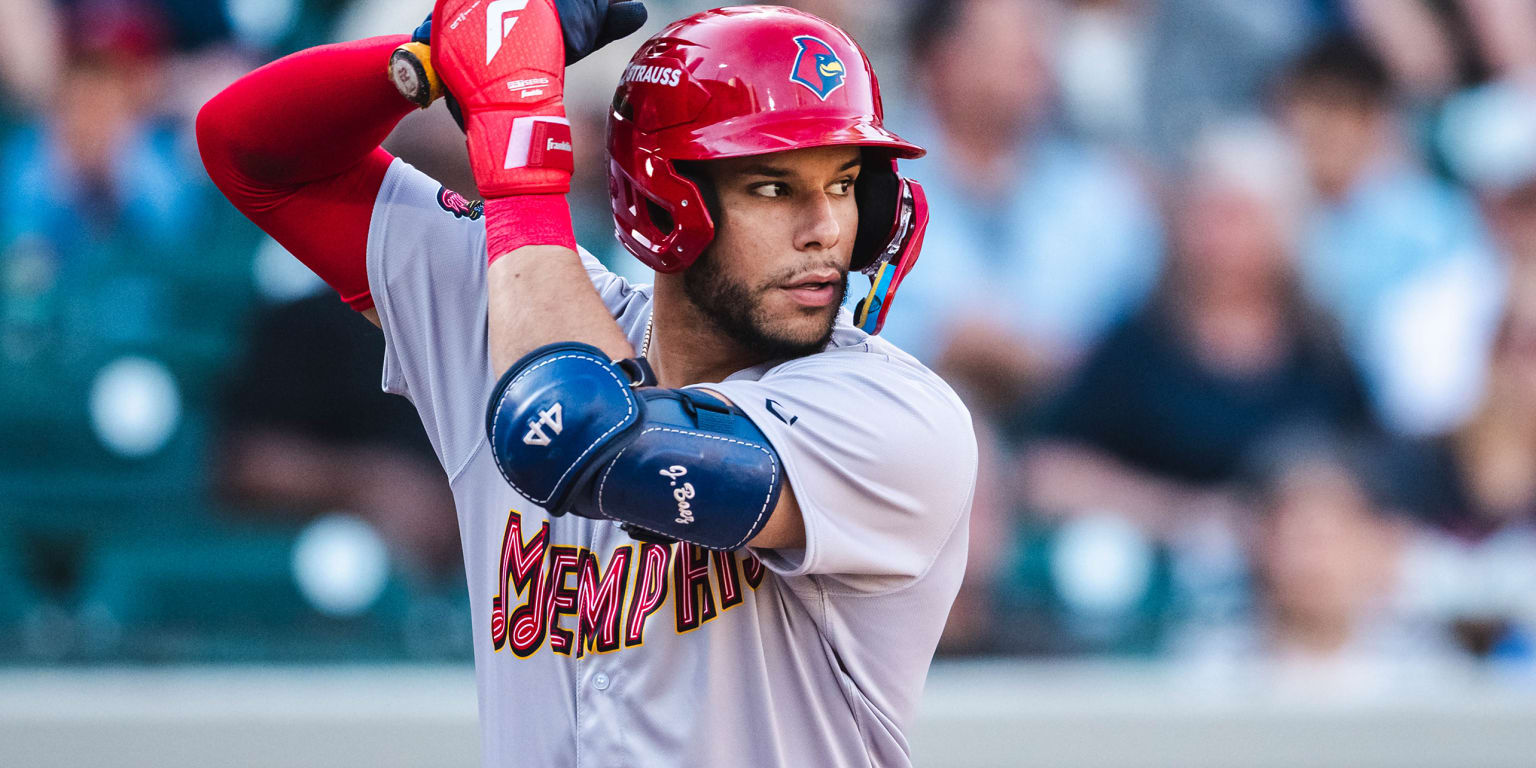
The real turning point arrived in 2026. After hitting .333 with three homers in spring training, Báez opened the year at Triple-A Memphis and authored a four-homer game on June 16 — a single-game Redbirds record he dedicated to his late father. By the time the Cardinals promoted him on August 14, he had mashed 34 home runs with 90 RBIs in 103 Triple-A games.
Why Báez's Debut Changes the Cardinals' Outlook
For a Cardinals club in the thick of a pennant race, Báez's arrival adds a power bat the outfield had been missing. His debut wasn't just historic — it was immediate proof that his Triple-A production could translate against big-league pitching.
By homering off Boyd three times on three different pitch types, Báez demonstrated the all-fields power and plate coverage that made him a first-round-caliber talent coming out of high school. It was a reminder of why Baseball America spent the summer documenting how the once-struggling prospect had "reinvented his career."
The record books now carry his name: the most home runs in a major league debut (three) and the most consecutive home runs to begin a career (three). No player before him had ever homered in his first three at-bats — a mark that had stood for well over a century of professional baseball.
Where Things Stand: The Cardinals' Newest Slugger
Báez debuted as the Cardinals' starting left fielder wearing No. 22. Manager Oli Marmol made the call-up official on August 14, and within 24 hours the rookie was the talk of the sport.
The Cardinals, who added Báez to their 40-man roster in November 2025 to protect him from the Rule 5 Draft, now boast a 23-year-old cornerstone under team control for years to come — and a fan favorite whose story has resonated well beyond St. Louis.
What's Next for Joshua Báez and the Cardinals
The challenge now is consistency. Historic debuts are often followed by the inevitable adjustments big-league pitching brings, and Báez will face a steady diet of scouting reports dissecting the same swing that launched three baseballs into the Wrigley Field seats.
But the tools — elite bat speed, plus power to all fields, and the stolen-base dimension that produced 54 steals in 2025 — suggest his ceiling remains sky-high. If he can carry even a fraction of Saturday's production forward, the Cardinals will have landed an impact bat for the stretch run.
Key Takeaways: Joshua Báez's Historic Debut
- Báez became the first player in MLB history to homer in each of his first three plate appearances.
- All three home runs came off Cubs starter Matthew Boyd — 450 feet, 382 feet and 368 feet — on a fastball, changeup and slider.
- He finished 3-for-4 with three homers and five RBIs in an 8-4 Cardinals win over Chicago.
- A 2021 second-round pick who signed for $2.25 million, Báez reinvented himself with a 2025 breakout and a 34-homer Triple-A season in 2026.
- His debut set MLB records for most home runs in a first game and consecutive homers to begin a career.